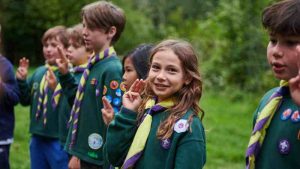
 Volunteering with 3rd Brampton Scout Group in Holymoorside, Chesterfield offers a powerful way to invest in your local community, support young people’s growth, and be part of something truly special. As a Scout group rooted in decades of history and community spirit, 3rd Brampton gives volunteers the chance to shape positive childhood experiences and unlock life-changing opportunities for young people across Derbyshire.
Who Are 3rd Brampton Scouts?
3rd Brampton (St Thomas’) Scout Group meets at St Thomas’ Church in Holymoorside and welcomes young people from around the area, typically aged around 4 to 14.5 years old. The group runs weekly activities and focuses on personal development, teamwork, and outdoor adventure — all delivered by a dedicated team of adult volunteers.
Whether it’s Squirrels, Beavers, Cubs, or Scouts, each section brings its own energy and opportunities for youngsters to grow — and each benefits enormously from the time and enthusiasm that volunteers bring.
 Aside from the entertaining egg hunts, why do people celebrate Easter?
 Essential Facts:
 As the days grow shorter, it’s tempting to stay indoors, but just because the temperature’s dropping doesn’t mean the fun has to!

 It’s the 15th century and China is facing invasion from the Huns, a nomadic tribe keen to conquer the land. In an effort to gather defence, one man from every family is called to arms. But for the patriarch of the Fa family – a former warrior of great fame and respect – there are issues preventing him from fulfilling his duties. In old age, he cannot walk properly, and is certain to perish as soon as he steps into battle. That’s when his brave daughter, Mulan – tired of being mocked for being too ambitious and too tomboyish – decides to go on a secret mission to prove her worth in a society she feels is yet to acknowledge it. One dark and stormy night, she prays to her family’s ancestors for protection before fleeing into the heart of the conflict, dressed in her farther’s armour and disguised as a man. What follows is a classic Disney story of bravery, honour and a quest for love and truth – with a difference. Released at a time where the only other princesses on screen were mostly seen swanning around in big ball gowns and fainting
 ‘The whole universe depends on everything fitting together just right. If one piece busts, even the smallest piece, the entire universe will get busted.’ Set in the fictional landscape of the Bath Tub (often compared to areas of New Orleans after Hurricane Katrina), this is the tale of Hushpuppy, a heroic six year old who – faced with a changing climate that threatens to flood what remains of her childhood home – decides to fight back. Along the the way, she must sail the seas, battle ancient creatures unleashed from the melting ice caps, and find her feet in an increasingly hostile world. It’s a fable that’s hard to describe, but don’t let the quirky appearance fool you. Beneath the whimsey is a film of lasting depth: a celebration of friendship forged across generations, the power of imagination and the importance of never giving up. It’s a tough watch in places, with moderate swearing and several harsh truth bombs that reveal the deep divide between the rich and the poor. But watch it with young people aged eight and above and it’s sure to become a firm favourite.
  It’s 2001 in Malawi and the Kamkwamba family, like many others in the region, are struggling to make ends meet. Despite the burdensome financial costs, parents Trywell and Agnes try to keep on top of their children’s education. But when 13 year old William is forced to leave school after they fall behind on his payments, he becomes determined to help not only his family but the whole community, who are all doing their best to deal with an escalating famine
 In October 2012, 15 year old Malala Yousafzai was riding the bus when a member of the Taliban came on board,
 Michael Bond – author of the original author of the original Padding books (later a TV series) – grew up in Britain during the second world war, and watched as his parents opened their home to evacuees fleeing persecution.
  Filmed in an orphanage in the Kingdom of Eswatini (formerly Swaziland), Liyana tells the story of five children who call it home and the paths that led them there. With the support of their teachers, they’re encouraged to work together to turn past trauma into an original folk tale about a brave young girl who embarks on a perilous quest to save her twin brothers from danger. Weaving together sublime 3D animation and behind the scens footage, the film is part documentary, part interactive storybook – seamlessly blending fact and fiction to offer a rare perspective,