Aside from the entertaining egg hunts, why do people celebrate Easter?
People from different cultures and countries have a different take on what Easter is all about. They also have different interpretations of its original meaning and their traditions on how to celebrate it.
Here are a few Easter facts from its Pagan and Christian history, and the practices people do to celebrate it, then until now.
Quick Facts:
- The term ‘Easter’ came from Eostre, the Anglo-Saxon goddess of spring and fertility.
- Some countries call it ‘Pascha’, which means ‘Passover’ in Hebrew.
- Easter celebrates the Resurrection of Jesus three days after his Crucifixion.
- Passion Week, or more commonly known as Holy Week, happens before Easter.
- Easter is a movable holiday due to the Passover date’s dependency on the phases of the moon.
 Essential Facts:
- While the majority of those who celebrate Easter are Christians, the holiday has pagan origins.
- Good Friday, the Friday before Easter, commemorates the Crucifixion of Jesus Christ.
- In the United States only 12 states recognize Good Friday as an official holiday.
- Orthodox tradition bans the celebration of Easter on or before the Passover.
- In 1873 Fry’s of Bristol produced the first chocolate egg in the UK.
- Chocolate makes up 70% of all the confectionery purchased every Easter.
- Easter represents celebration, joy, and new life.
- In the 80s, Germany produced the first edible Easter bunnies made of sugar and pastry.
- People in the U.S. spend an average total of $14.7 billion on Easter celebrations. In England it’s £2 billion! Considering the size difference, that’s a huge amount of chocolate!
- During Easter mass attendance in churches doubles.
Interesting Facts:
- Over 28,000 or 59% of Americans eat the ears of the chocolate Easter bunny first. Not sure what we do in the UK, maybe, we should do our own survey… a job for the scouts perhaps?
- Easter ranks second to Halloween where we spend the most money on chocolate.
- The first versions of Easter baskets resembled bird’s nests.
- Egg farmers in the UK and America donate over 15 million eggs to food banks nationwide.
- Chocolate must be made all-year-round to meet the annual Easter Egg demand.
Easter Statistics:
-
- More than 4 in 5 Brits (84%) plan to celebrate Easter in 2024, which is around 44.5 million people.
- 3 in 4 Brits (77%) plan to spend some money on the holiday.
- Brits are projected to spend over £2 billion on Easter 2024, with an average spend of £53 each.
- Around 80 million Easter eggs are sold in the UK each year.
- Residents in Northern Ireland are most likely to mark the Easter weekend, with an impressive 9 in 10 people (93%), planning to celebrate in some capacity. Spending an average of £78 each! This figure is perhaps not surprising given that around 80% of the population identifies as Christian.
- At the other end of the spectrum, 79% of residents in Wales are planning to celebrate, with the average spend a more economical £36.
So… better get saving then!
Source: https://www.finder.com/uk/banking/easter-spending-statistics

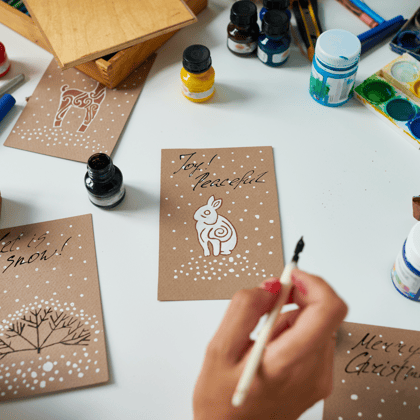









 Photography by Sam Longhurst Photography
 We hope you can attend the short meeting. Join us to find out how we have managed the group over the past year, and have your say how we run the next year.
 There are a few things that you need to be aware of for returning to face to face meetings.
 It’s the 15th century and China is facing invasion from the Huns, a nomadic tribe keen to conquer the land. In an effort to gather defence, one man from every family is called to arms. But for the patriarch of the Fa family – a former warrior of great fame and respect – there are issues preventing him from fulfilling his duties. In old age, he cannot walk properly, and is certain to perish as soon as he steps into battle. That’s when his brave daughter, Mulan – tired of being mocked for being too ambitious and too tomboyish – decides to go on a secret mission to prove her worth in a society she feels is yet to acknowledge it. One dark and stormy night, she prays to her family’s ancestors for protection before fleeing into the heart of the conflict, dressed in her farther’s armour and disguised as a man. What follows is a classic Disney story of bravery, honour and a quest for love and truth – with a difference. Released at a time where the only other princesses on screen were mostly seen swanning around in big ball gowns and fainting
 ‘The whole universe depends on everything fitting together just right. If one piece busts, even the smallest piece, the entire universe will get busted.’ Set in the fictional landscape of the Bath Tub (often compared to areas of New Orleans after Hurricane Katrina), this is the tale of Hushpuppy, a heroic six year old who – faced with a changing climate that threatens to flood what remains of her childhood home – decides to fight back. Along the the way, she must sail the seas, battle ancient creatures unleashed from the melting ice caps, and find her feet in an increasingly hostile world. It’s a fable that’s hard to describe, but don’t let the quirky appearance fool you. Beneath the whimsey is a film of lasting depth: a celebration of friendship forged across generations, the power of imagination and the importance of never giving up. It’s a tough watch in places, with moderate swearing and several harsh truth bombs that reveal the deep divide between the rich and the poor. But watch it with young people aged eight and above and it’s sure to become a firm favourite.
  It’s 2001 in Malawi and the Kamkwamba family, like many others in the region, are struggling to make ends meet. Despite the burdensome financial costs, parents Trywell and Agnes try to keep on top of their children’s education. But when 13 year old William is forced to leave school after they fall behind on his payments, he becomes determined to help not only his family but the whole community, who are all doing their best to deal with an escalating famine