Continuing a long tradition
The King takes on the role with immediate effect and continues a long tradition of the monarch giving their Patronage, dating back to 1912. This was when Scouts was granted its Royal Charter and HM George V became our first Patron.
Before His Majesty King Charles III, the post was previously held by Her Late Majesty Queen Elizabeth II for the duration of her 70 year reign.
A champion for young people
Patronages typically reflect the interests of the member of the Royal Family involved. Over many years, HM King Charles III has consistently championed young people across a range of causes, including Scouts and The Prince’s Trust.
To watch in full screen, double click the video
Bear Grylls OBE, Chief Scout, says: ‘We’re honoured that His Majesty The King is Patron of Scouts. He continues a great tradition of the monarch championing our Scouts and volunteers since our first Patron, King George V in 1912.
‘HM The King’s example of service is an inspiration to us all, and we’re especially grateful for The King’s endorsement of the highest achievement for young people in Scouts: the King’s Scout Award. We promise to continue to do our best to help other people, to make our communities closer, kinder and stronger. As Chief Scout, and on behalf of the whole Scout movement, I thank His Majesty for his unwavering support.’
Ayesha Karim, UK Youth Lead, says: ‘As a Scout, I’m so proud that The King is our Patron. He’s lived his whole life giving service to others, and this is what we do in Scouts too. I know he’ll continue to be such a good friend to Scouts, and it’s so encouraging to have him at our side.’
 According to the dictionary a jamboree is a party, celebration, or other gathering where there is a large number of people and a lot of excitement, fun, and enjoyment. And that is exactly what it is!
 encompassing 8.8 square kilometers.. The largest section is 6.1 kilometers wide and 1.8 kilometers long. Stretching beside the West Coast near Byeonsanbando National Park, the huge Jamboree campground (35’42”N 126’35”E) is endowed with rich natural surroundings—one side of the venue adjoins the ocean.(35’42”N 126’35”E)
 But it’s not just the eyes that itch: The nose twitches, the neck basically the whole. body can get itchy!
 If this is you, here are some little tips to help you along through these tough months.
 for hay fever.
 I know many of you mark Pancake Day and look forward to your pancakes. This year Pancake day (Shrove Tuesday) falls on Tuesday 21st February and Ash Wednesday the following day.
 Lent lasts for 40 days (not counting Sundays – fasting is not required on these days) marked by repentance, fasting, reflection and ultimately celebration. The 40 day period represents Christ’s tome of temptation in the wilderness, where he fasted and Satan tempted him. Lent asks believers to set aside a time each year for similar fasting, marking an intentional season of focus for Christ’s life, ministry, sacrifice and resurrection.
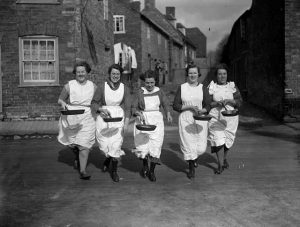 In the UK, pancake races became an important part of Shrove Tuesday celebrations. As well as giving up “luxury” foods, the faithful were expected to forego fun pastimes such as dancing and playing games like football. Therefore Shrovetide (The four days preceding lent) was a time for merriment. A legacy of these festivities is the pancake race. Dating from around 1445, legend has it that local women heard about Shriving bell while making pancakes and ran to church in their aprons, still clutching her frying pan. This became the opportunity for large numbers of people, often in fancy dress, to race down the streets tossing pancakes. The object of the race is to get to the finishing line first, carrying a frying pan with a cooked pancake in it and flipping it as they run. Although like many traditions this has mostly died out, however tradition prevails as there is still a race every year in
  So on Pancake Day – Tuesday 21st February 2023 – enjoy your pancakes, whether you prefer them sweet or savoury, and reflect on the past… maybe think about reviving the Pancake Race in your community??
 Christmas is an annual festival commemorating the birth of Jesus Christ, observed primarily on December 25 as a religious and cultural celebration among billions of people around the world.
 actually give and receive gifts on the 25th December. In many other European countries, it is custom to give gifts on the 24th and in Spanish speaking countries it is often custom to give presents after Christmas. The United Kingdom is one of the few countries where gifts are opened on Christmas Day itself.
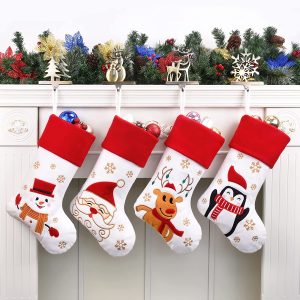 On Christmas Eve, children around the UK hang stockings (a type of large sock) on their fireplaces (or wherever is convenient) so that Saint Nicholas (otherwise known as Santa Claus or Father Christmas) can fill their stockings with presents, fruit, candies or coins. In the Western tradition, it is believed that if children are badly behaved their stockings will be filled with a single lump of coal instead of presents.
 The countdown to Christmas is on!
 Or watch some classic Christmas films at home
 take a trip outdoors – whether that’s to your garden or local park – and build a magical snowman together. All you need to do is grab some mittens, pull on those wellies, wrap up warm and get building! Don’t forget to take a carrot for a nose and an extra scarf to keep your wintery creation nice and warm.
 Family game nights


 Photography by Sam Longhurst Photography