 Aside from the entertaining egg hunts, why do people celebrate Easter?
People from different cultures and countries have a different take on what Easter is all about. They also have different interpretations of its original meaning and their traditions on how to celebrate it.
Here are a few Easter facts from its Pagan and Christian history, and the practices people do to celebrate it, then until now.
Quick Facts:
- The term ‘Easter’ came from Eostre, the Anglo-Saxon goddess of spring and fertility.
- Some countries call it ‘Pascha’, which means ‘Passover’ in Hebrew.
- Easter celebrates the Resurrection of Jesus three days after his Crucifixion.
- Passion Week, or more commonly known as Holy Week, happens before Easter.
- Easter is a movable holiday due to the Passover date’s dependency on the phases of the moon.
 Essential Facts:
- While the majority of those who celebrate Easter are Christians, the holiday has pagan origins.
- Good Friday, the Friday before Easter, commemorates the Crucifixion of Jesus Christ.
- In the United States only 12 states recognize Good Friday as an official holiday.
- Orthodox tradition bans the celebration of Easter on or before the Passover.
- In 1873 Fry’s of Bristol produced the first chocolate egg in the UK.
- Chocolate makes up 70% of all the confectionery purchased every Easter.
- Easter represents celebration, joy, and new life.
- In the 80s, Germany produced the first edible Easter bunnies made of sugar and pastry.
- People in the U.S. spend an average total of $14.7 billion on Easter celebrations. In England it’s £2 billion! Considering the size difference, that’s a huge amount of chocolate!
- During Easter mass attendance in churches doubles.
Interesting Facts:
- Over 28,000 or 59% of Americans eat the ears of the chocolate Easter bunny first. Not sure what we do in the UK, maybe, we should do our own survey… a job for the scouts perhaps?
- Easter ranks second to Halloween where we spend the most money on chocolate.
- The first versions of Easter baskets resembled bird’s nests.
- Egg farmers in the UK and America donate over 15 million eggs to food banks nationwide.
- Chocolate must be made all-year-round to meet the annual Easter Egg demand.
Easter Statistics:
-
- More than 4 in 5 Brits (84%) plan to celebrate Easter in 2024, which is around 44.5 million people.
- 3 in 4 Brits (77%) plan to spend some money on the holiday.
- Brits are projected to spend over £2 billion on Easter 2024, with an average spend of £53 each.
- Around 80 million Easter eggs are sold in the UK each year.
- Residents in Northern Ireland are most likely to mark the Easter weekend, with an impressive 9 in 10 people (93%), planning to celebrate in some capacity. Spending an average of £78 each! This figure is perhaps not surprising given that around 80% of the population identifies as Christian.
- At the other end of the spectrum, 79% of residents in Wales are planning to celebrate, with the average spend a more economical £36.
So… better get saving then!
Source: https://www.finder.com/uk/banking/easter-spending-statistics
 With the camping season new getting nearer, it’s time to dust off the old camping blanket (or buy a new one) and get sewing all those spare badges on. Of course if you are relatively new to scouting, you might be wondering what all the fuss is about….
 them, as were Union and Confederate forces in the American Civil War. In the 20th century, they subsequently became field issue for troops in the Great War and the Second World War on both Axis and Allied sides too. Blankets also went to sea, and cabin blankets were first made in the early 1700s. In almost all cases, these military blankets were a drab khaki or grey colour. Following the cessation of these conflicts, forces veterans often kept them for their own use, while surplus blankets were frequently co-opted by other outdoorsy types, including numerous Boy Scout troops. In turn, this gave rise to the Scouting tradition of the camp blanket as a wearable reminder of shared adventures and experiences, gradually becoming adorned with embroidered Scout badges.




 As the days grow shorter, it’s tempting to stay indoors, but just because the temperature’s dropping doesn’t mean the fun has to!
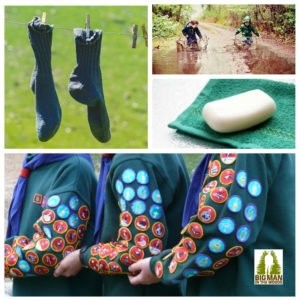 So you’ve signed your little Monkey up to join our Beaver Colony, they go every week and have lots of fun learning new skills and making new friends.
  Today the 8th of March 2023, we’re celebrating International Women’s Day. Celebrating women all around the world, and the magnificent things that they do.
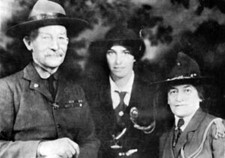 set up Girl Guiding, as it’s known as today. Girls weren’t always allowed in Scouts. It was known as Boy Scouts. But over 40 years ago, girls were allowed. But officially girls in all sections started in 2007. 29% of girls make up the UK Scout youth membership, and 43% of the adult volunteers here in UK Scouts are female.
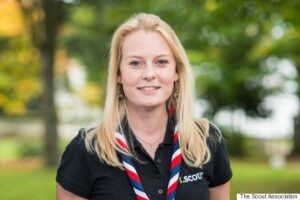 In 2014, we welcomed the first UK Youth Commissioner, Hannah Kentish. And in January 2020, she was awarded an MBE, British Empire Metal. Well done Hannah!. And in 2020, the Duchess of Cambridge, She doubled up with the Duke of Kent to become President of UK scouting.
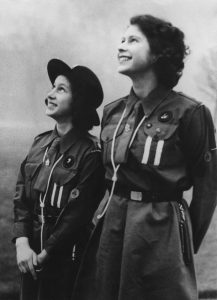 Now this might surprise you. I kept this one for last. International women’s day, who do you think in the whole of the world is the most famous scout? Of course, Queen Elizabeth II, the UK’s queen, she was a scout. She also went to Scouts with her sister, Princess Margaret, and they started back in 1937. Well, let’s not forget the Queen’s daughter Princess Anne. She also was a member of Girl Guides.
 amazing Scouts and what they’ve done for themselves, and proving that Scouts can make you go to places even such as in space. You never know some of these Scouts that are in 3rd Brampton Scouts now could well be famous ladies in our near future!


 Photography by Sam Longhurst Photography
 We hope you can attend the short meeting. Join us to find out how we have managed the group over the past year, and have your say how we run the next year.